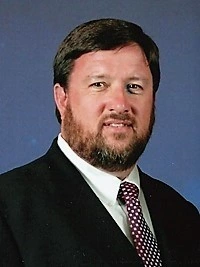
An enlisted beginning
Walter L. Christman enlisted in the U.S. Army in 1975. He served in Special Forces before entering Duke University and earning an Army Reserve commission in 1983. He was Airborne, Ranger and Special Forces qualified. A peacetime training emergency brought a medal for risking his life to save a fellow soldier. In 2017, the Duke/NCCU Army ROTC program inducted him into its Hall of Fame.
His education took him from Duke to Columbia, where he studied international affairs, to Harvard’s Kennedy School for public administration, and to the University of Geneva for a doctorate in international relations. The Special Forces motto De Oppresso Liber, “to free the oppressed,” accompanied him into each setting. In his writing today, he asks what people need after a moment of liberation if they are to exercise freedom for themselves.
A school for former adversaries
With the Soviet Union gone, officials on both sides of the former Iron Curtain faced a question their careers had scarcely prepared them for. How could civilian authorities and uniformed officers build working relationships across what had been enemy lines? As a civilian in the Office of the Secretary of Defense, Walter helped conceive and establish the George C. Marshall European Center for Security Studies in Garmisch, Germany.
The center was dedicated in 1993. That August, the Secretary of Defense awarded Walter the Medal for Meritorious Civilian Service. The citation credits him with identifying the need for the center, naming it, securing authority to put it into operation and organizing support for its inauguration. The center continues to bring security professionals together at a joint U.S.–German institution.
How partners learn to work together
A center can give people a place to meet. Walter’s next concern was what they could do together once they returned home. He helped shape NATO partnership training policy and worked on educational networks through which colleagues in different countries could share lessons and develop their own expertise. At NATO’s 1999 Washington Summit, training and education became a more explicit part of the Partnership for Peace program.
Walter spent more than a decade in Geneva in U.S. diplomatic service. His work across the Defense Department, State Department, Congress and White House gave him a view of cooperation from both the negotiating table and the institutions responsible for carrying agreements out. He later wrote about the Partnership for Peace Consortium’s communities of experts and, with Thomas Hazard, about how educators could keep a coalition learning across national boundaries.
The classroom and the negotiating table
In 2008 the Naval Postgraduate School appointed Walter an associate professor with a duty station in Geneva. In 2015 he became senior global engagement fellow at the Middlebury Institute’s Cyber Initiative. Teaching gave him a way to examine a difficulty that had followed him through public service. An agreement can assign responsibility. It takes people who know and trust one another to act on it when circumstances change.
His professional services firm, Global Strategic Resources, approaches that difficulty by studying an institutional problem, finding prospective partners and helping them decide how to work together.
Through the Burlingame Foundation he has returned to a much earlier encounter between China and the United States. The work of nineteenth-century diplomat Anson Burlingame offers him a way to ask how respect and reciprocity might guide relations between rivals today.
Whose experience gets heard?
As chairman and founding director of the Geneva-based Global Challenges Forum Foundation, Walter brought this interest in cooperation to education and sustainable development. The conversations that led to the Forum began in Geneva in 2009. Its international launch followed in 2010. The work developed through exchanges among educators, researchers, officials and community leaders, including collaborators in India.
On September 27, 2019, the Foundation and the United Nations Institute for Training and Research jointly launched One Million Youth Leaders for Sustainable Development Beyond 2030 (1M2030) at the Palais des Nations. Nine young speakers presented projects of their own. For Walter, young people who know a problem firsthand belong among those deciding what to do about it.
From the books to the table
The Age of Convergence brings together the questions Walter has pursued in uniform, government and education. The first book, The Apocalypse of Assumptions, asks how inherited ideas can blind people to the world before them. Building Global Resilience asks how people can develop the capacity to respond together. Empowering Change asks who will take responsibility and how anyone will know whether the work made a difference.
The trilogy rests on four principles that Walter calls Reciprocal Freedom, Relational Sovereignty, Stewardship and the Covenant of Mutual Obligation. Global Resilience University turns the chapters into courses. A Covenant Table gives participants a place to test what they have learned. People who share a problem bring evidence and their own experience, agree on commitments and return to find out what changed. The LEADS Institute is the publisher of the trilogy.
Conscience and hospitality
Jesus Is Woke expresses Walter’s Christian convictions in an American civic setting. He takes the word “woke” seriously as a call, rooted in Black experience, to remain alert to oppression. His writing asks what allegiance to Jesus requires when political leaders invite contempt for a neighbor or religious leaders excuse cruelty. The initiative welcomes readers of any faith or none into an argument about conscience, independent judgment and the freedom of others.
Walter also welcomes guests to his home in California wine country. At Grand Residence at San Antonio Estate, the books, art and furnishings he gathered during a life of travel have found a home. His tour takes guests from the Europa Salon to the Americana Study and from Istanbul to Shanghai in the space of a hallway.
Speaker introduction
Walter L. Christman is a former U.S. Army Special Forces soldier, diplomat, educator and author of The Age of Convergence. He helped establish the George C. Marshall European Center for Security Studies and co-founded the Global Challenges Forum Foundation in Geneva. His work asks how people learn to act together.
Extended introduction
Walter L. Christman began public service as an enlisted U.S. Army Special Forces soldier. At the Pentagon, he helped conceive and establish the George C. Marshall European Center for Security Studies, earning the Secretary of Defense Medal for Meritorious Civilian Service. He spent more than a decade in Geneva in U.S. diplomatic service and taught at the Naval Postgraduate School. As chairman and founding director of the Global Challenges Forum Foundation, he helped bring young leaders to the United Nations in Geneva to present their own work. His trilogy, The Age of Convergence, and Global Resilience University invite readers, educators and communities to put a practical question to the test. What can people accomplish together that they cannot achieve alone?