1970–1983
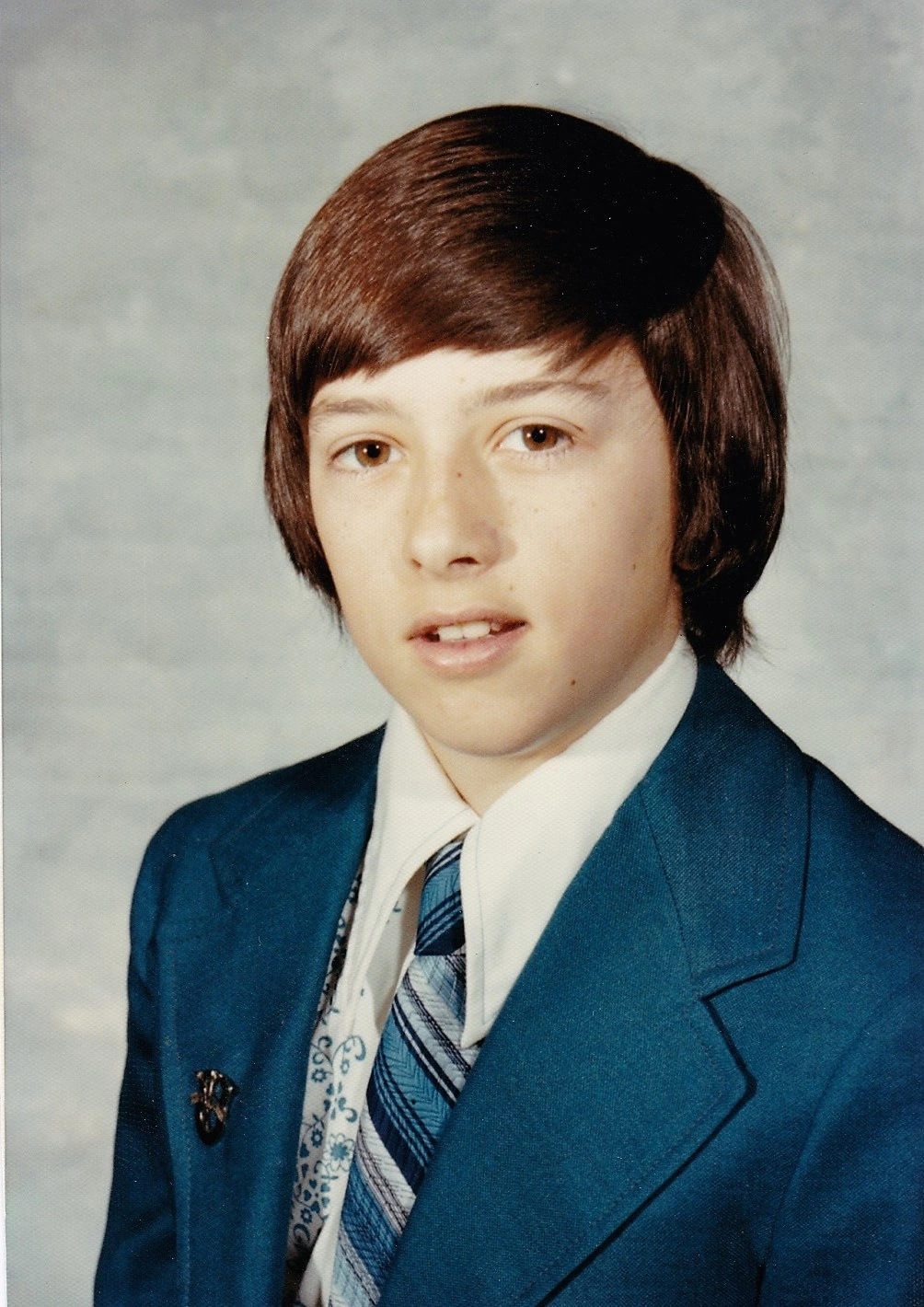
The boy in the blue blazer
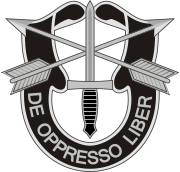
In eighth grade Walter wore a Special Forces crest. Years later, on an A-Team and then at Duke, he began to ask what it meant to live by the words on it.
The crest on the blue blazer
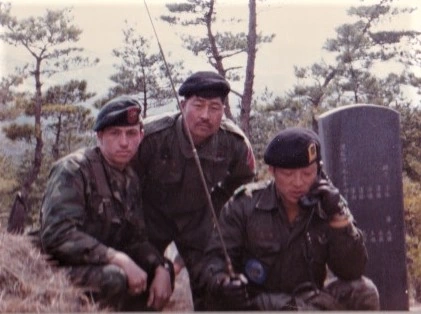
In his eighth-grade portrait, Walter Christman wears a Special Forces crest. He was still five years away from enlisting in the Army. By the time he was photographed in the field with Korean Special Forces, the insignia on the schoolboy’s blazer had become his profession. He would earn Korean parachutist wings.
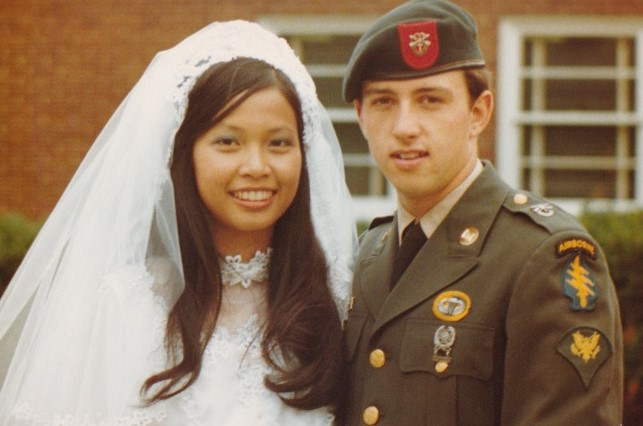
A wedding in a green beret
When Duke invited Walter back for his Army ROTC Hall of Fame induction in 2017, he asked that the audience have time to look at his wedding portrait. He and his wife were celebrating their fortieth anniversary that year. He wore his green beret for the wedding.
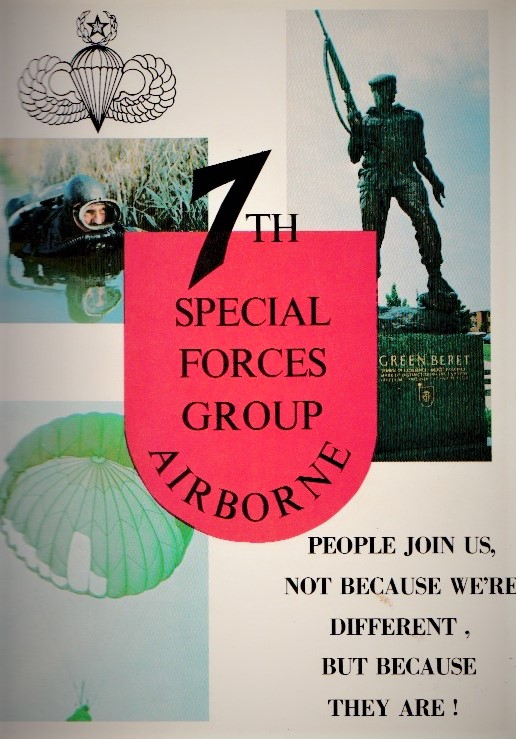
Captain Ken LaPlante and Team Sergeant John Rayburn
At twenty, Walter joined Special Forces Operational Detachment Alpha 765. Captain Kenneth LaPlante led the team. John Rayburn was its team sergeant. Walter served as the team’s junior demolitions sergeant.
Captain Ken LaPlante, an Honor Graduate in his Special Forces officers’ class, taught me that excellence is a form of duty and that he expected nothing less from those he led.
Team Sergeant John Rayburn taught me one of the most important lessons I have ever learned: mastery of a complex system requires the courage to create your own rules. He did not mean to abandon discipline. He meant understanding a system so deeply that when circumstances changed, or its contradictions incapacitated it, you could adapt rather than become imprisoned by assumptions that no longer worked. Above all, he embodied the unconventional.
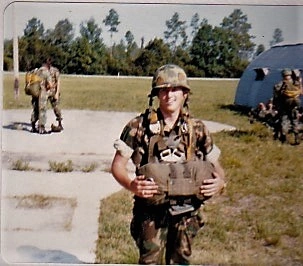
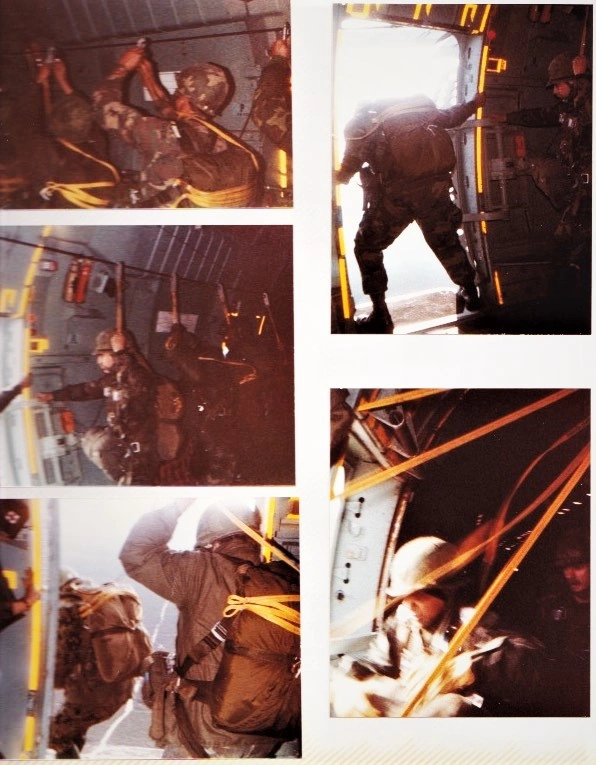
Bud Donahou and Gary Black
Bud had been a black belt in martial arts, a rodeo clown, and the Distinguished Honor Graduate and Merrill Marauders Award recipient at Ranger School, all while peering through coke-bottle-thick glasses that made him seem an unlikely warrior. Gary was the Honor Graduate of his Special Forces Medic course, one of the finest medics in the 7th Special Forces Group.
They spoke little about their accomplishments and lived the Special Forces creed as “quiet professionals.” Beside them, I often felt like the undistinguished junior demolitions sergeant with much to learn and a long way to go. Yet what impressed me most was not their skill but their character.
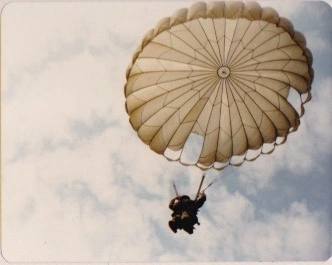
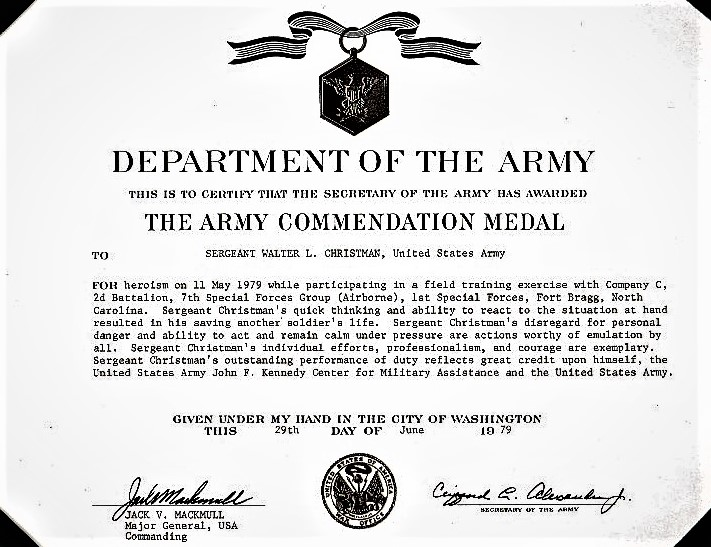
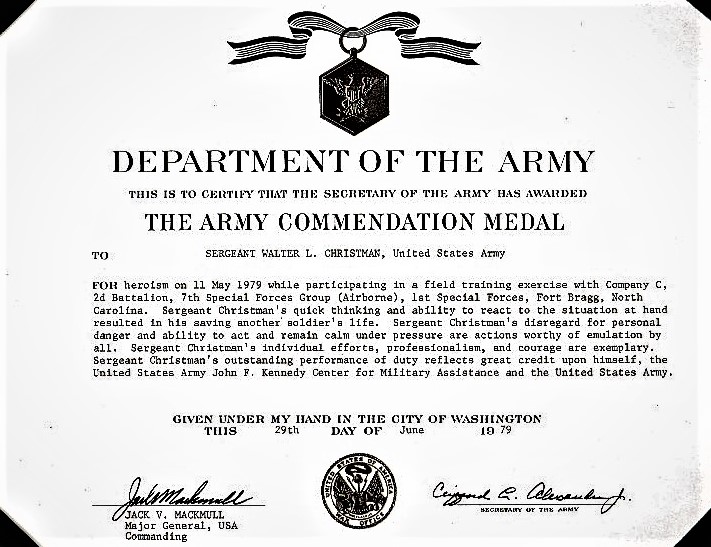
The Army Commendation Medal for heroism
On May 11, 1979, Sergeant Christman was taking part in a field training exercise at Fort Bragg, North Carolina, with Company C, 2d Battalion, 7th Special Forces Group (Airborne). The Army’s citation records that his quick thinking saved another soldier’s life. The award is dated June 29, 1979.
At the time, I regarded the medal as simply part of a soldier’s duty. Only years later did I come to appreciate why it mattered.
From the Army to Duke
A published interview with Henry Kissinger stayed with Walter. Kissinger spoke of managing the global equilibrium. Walter understood where a young soldier fitted into that arrangement and wanted to know who made the decisions. In 1979 he left active duty for Duke.
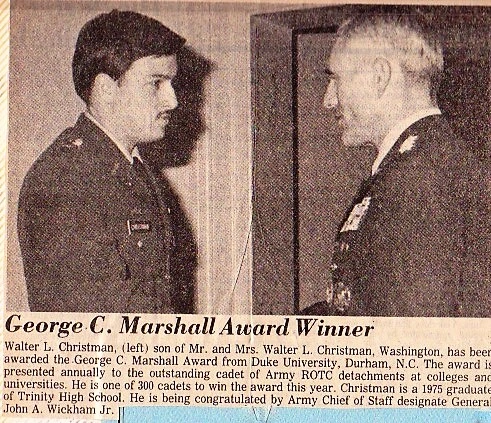
At Duke, Bruce Payne, a Freedom Rider who taught ethics, backed the former Green Beret’s effort to establish a peace studies curriculum. In April 1983, The Chronicle put his proposal for a Peace and World Policy Studies major on its front page. Walter earned an Army Reserve commission and the George C. Marshall Award that spring. A decade later he would give Marshall’s name to a school for people who had prepared to fight one another. Duke inducted him into its Army ROTC Hall of Fame in 2017.
Sources and recollections
- Walter L. Christman, The Apocalypse of Assumptions, Book I of The Age of Convergence, chapter 14, “Answering the Summons,” p. 205.
- Walter L. Christman to LTC Keirya Langkamp, April 2017. Correspondence about the Duke Army ROTC Hall of Fame ceremony and the wedding portrait.
- Department of the Army, Army Commendation Medal citation to Sergeant Walter L. Christman, June 29, 1979. Duke ROTC collection.
- Making Partners of Adversaries, chapter 1.