1987–1988
Nicaragua and Iraq
In 1987 Walter met Sandinista leaders in Nicaragua and visited a refugee camp in Honduras as a congressional staff member. On a two-week tour of Iraq in 1988, he met senior officials across the country to assess the prospects for cooperation.
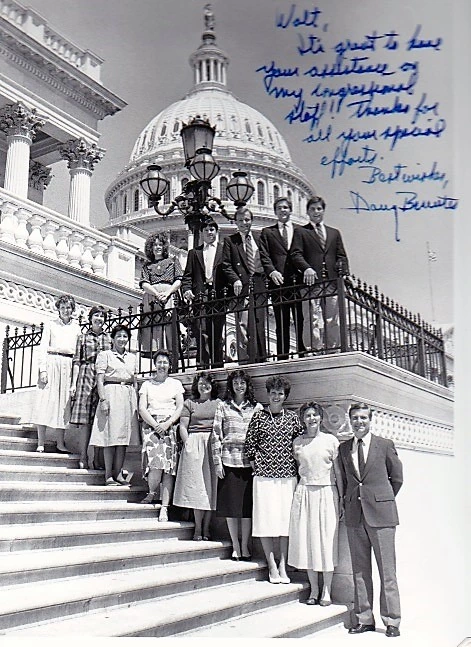
On Congressman Bereuter’s staff
Walter worked on foreign affairs for Nebraska Congressman Doug Bereuter. A photograph of the office staff on the Capitol steps carries a personal note from the congressman. His field assignments would take him from this office to Central America and Iraq.
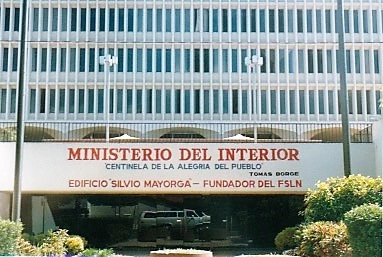
Nicaragua and Honduras, 1987
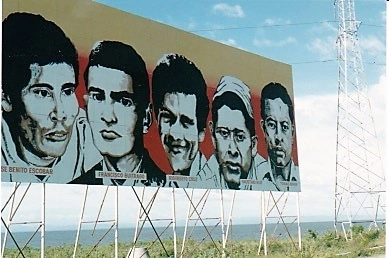
The name above a doorway in Managua told a visitor whose revolution had prevailed. The Ministry of the Interior occupied a building named for Silvio Mayorga, a founder of the Sandinista National Liberation Front. Walter photographed it on congressional business. As Bereuter’s foreign affairs legislative assistant, he met Sandinista leaders during the Contra War.
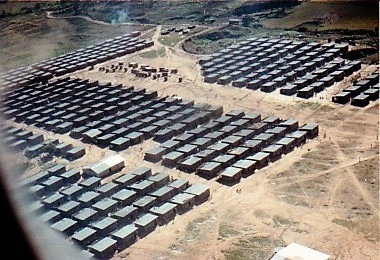
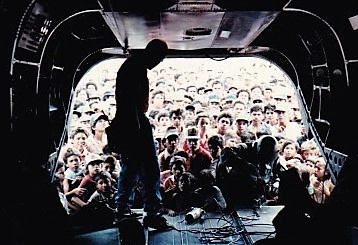
The view from the helicopter
Across the border in Honduras, Walter looked out of the open rear of a helicopter at a crowd below. The people in the camp were Nicaraguans who had fled their country. Back in Washington, President Ronald Reagan used the words “freedom fighters” for the Contras fighting the Sandinista government. The refugee camp gave Walter a different vantage point from which to weigh that phrase.
Two weeks in Iraq, 1988
In 1988, during the Iran–Iraq War, Walter spent two weeks in Iraq on a congressional staff visit to assess the prospects for cooperation between the United States and Iraq. In Baghdad, Walter and his colleagues met with Iraq’s oil minister and deputy foreign minister. They also met with the U.S. ambassador to Iraq.
In Irbil, the delegation met with the Kurdish governor. In Basra, they met with regional leaders. They visited Babylon and toured a mosque in Karbala. Walter remembers hearing Iranian shelling in the distance during the trip.
The delegation also met with women’s groups and other social organizations. Among those Walter and his colleagues spoke with were members of the People’s Mojahedin Organization of Iran (MEK), then fighting the government of Ayatollah Ruhollah Khomeini.
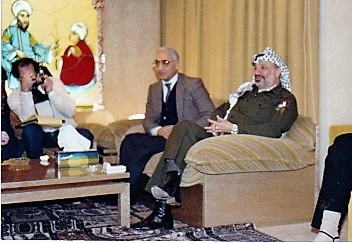
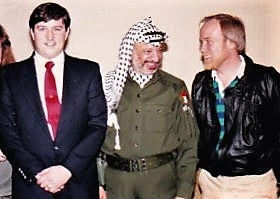
With Yasir Arafat in Baghdad
While in Baghdad, Walter also met the Palestinian leader Yasir Arafat at his safe house.
At the Martyr’s Monument
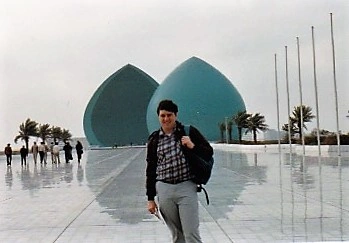
In Baghdad, Walter visited Al-Shaheed, the Martyr’s Monument, where two blue halves of a dome face one another. Completed in 1983 under Saddam Hussein, it originally commemorated Iraqis killed in the war with Iran. A guerrilla leader, a refugee camp and a government’s memorial each raised a different version of the question Walter brought back to Washington. Whose account of a war reaches the people who decide American policy?
Sources and recollections
- The Apocalypse of Assumptions, chapter 14, p. 207.
- Making Partners of Adversaries, chapter 1.
- Walter L. Christman, Empowering Change, p. 300, on the Iraq visit during the Iran–Iraq War.
- Walter Christman’s recollections of the 1988 Iraq tour, the officials and organizations he met, and the safe house and refugee camp in the photographs.
- La Prensa on the Silvio Mayorga building in Managua
- Ronald Reagan’s radio address on Central America, February 16, 1985